When accurate prediction models yield harmful self-fulfilling prophecies

Premedical Team, Inria, Montpellier, France

Department of Data Science Methods, Julius Center, University Medical Center Utrecht

2026-04-21

Prediction model performance versus healthcare impact

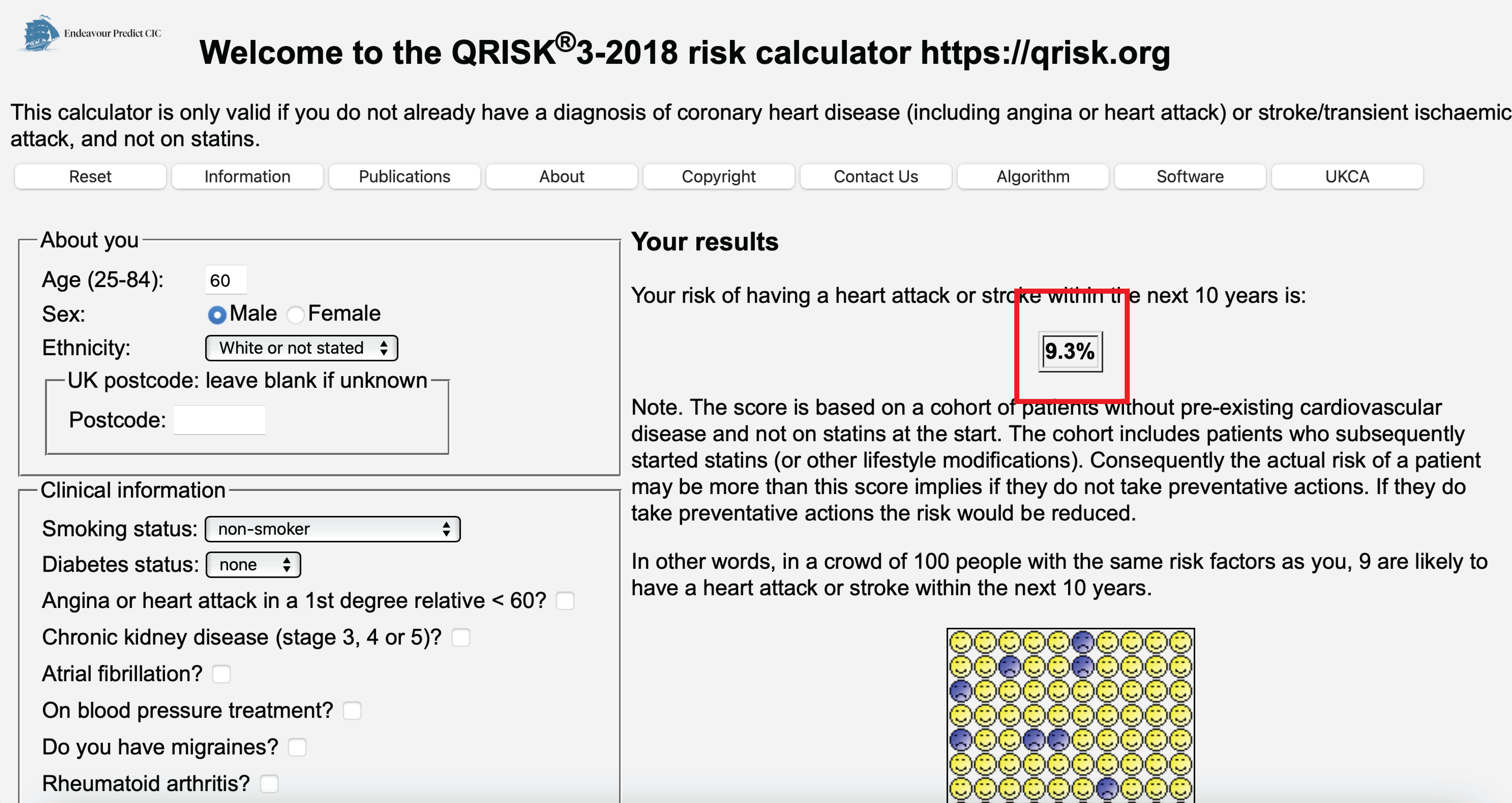
  • many prediction models: given feature \(X\), estimate probability outcome \(Y\)
    • e.g. given age, cholesterol and sex, predict 10-year risk of a heart attack
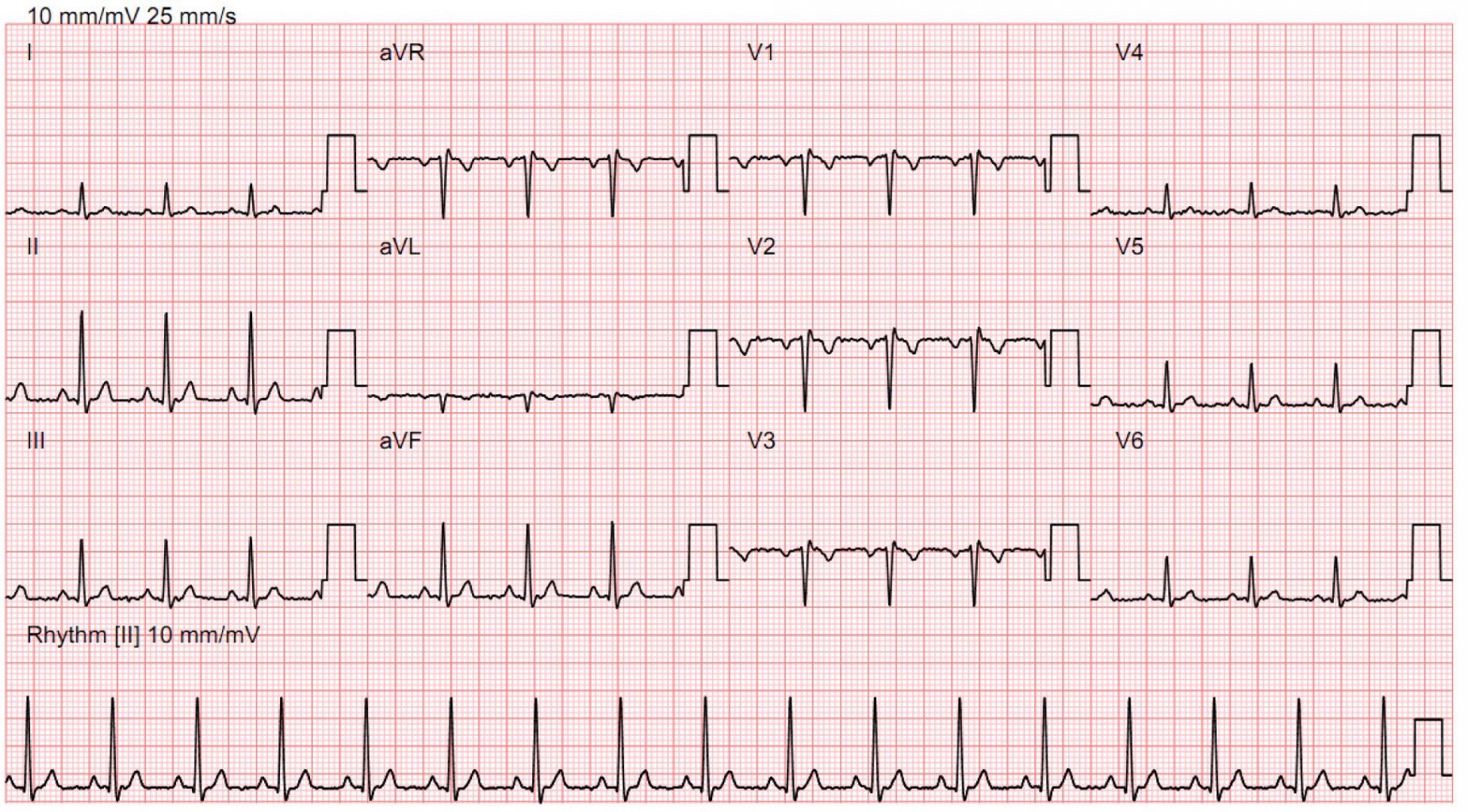
    • given ECG, predict presence of heart failure
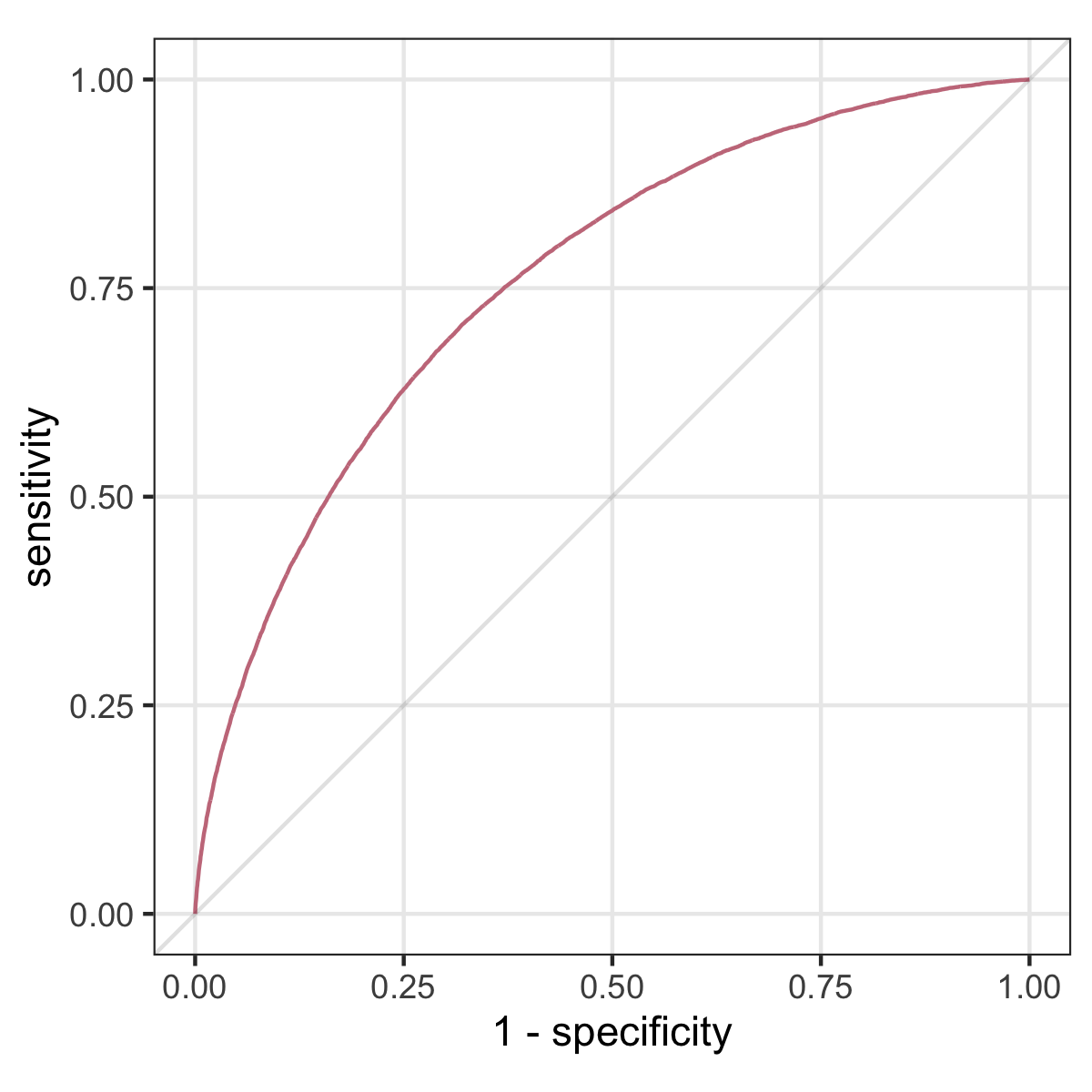
  • evaluated on predictive performance: discrimination (AUC) and calibration
Prediction model performance versus healthcare impact

  • then used for decision support
    • e.g. give statins if predicted risk of heart attack > 10%
  • aim: improve healthcare outcomes, without over-treating
  • sold as ‘personalized healthcare’, from ‘one-size-fits-all’ to ‘right treatment for the right patient’
  • the hope is: better predictive performance \(\implies\) better impact

what could possibly go wrong?

When accurate prediction models yield harmful self-fulfilling prophecies

Wouter van Amsterdam, Nan van Geloven, Jesse Krijthe, Rajesh Ranganath, Giovanni Cina; Patterns, 2025.

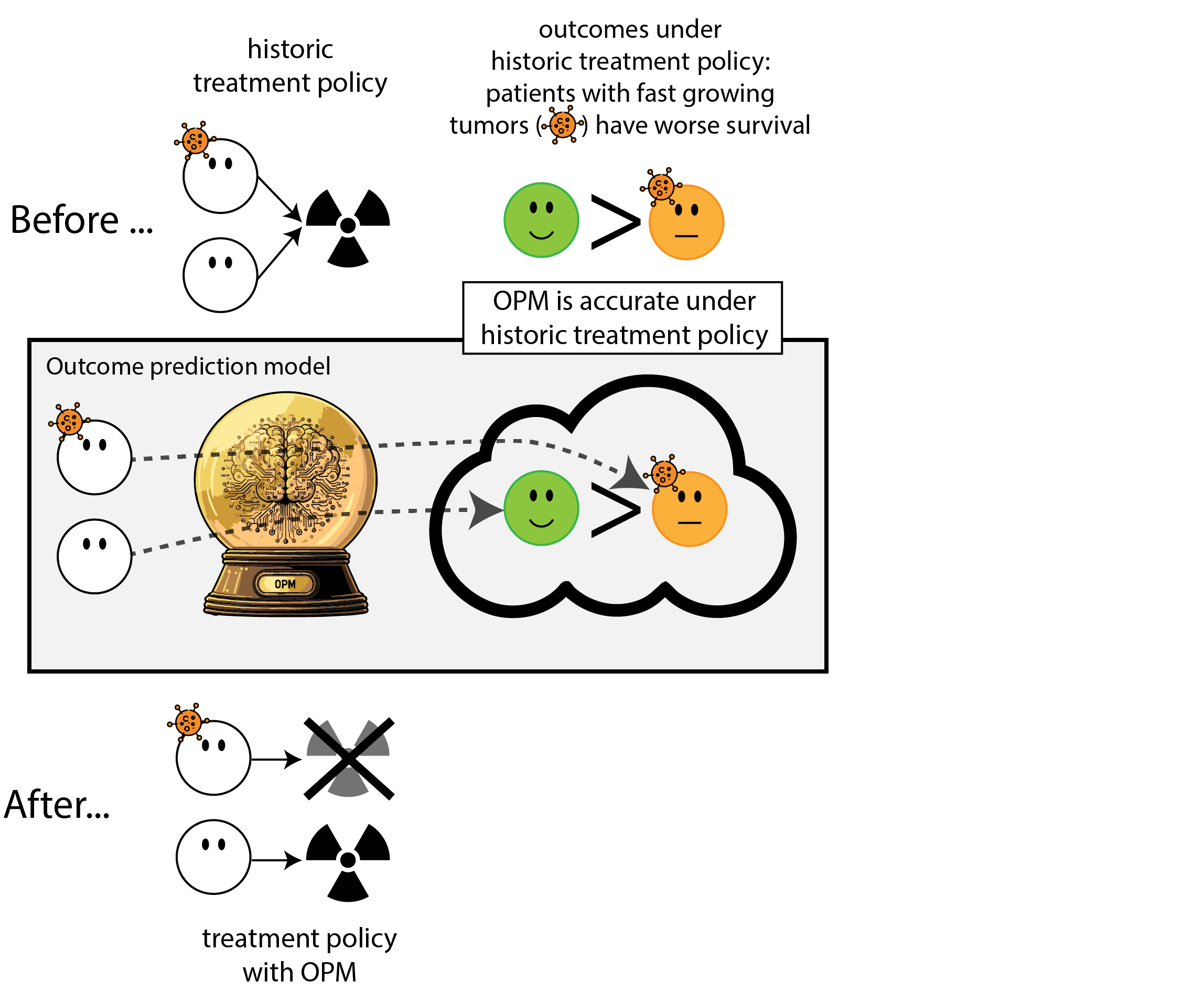
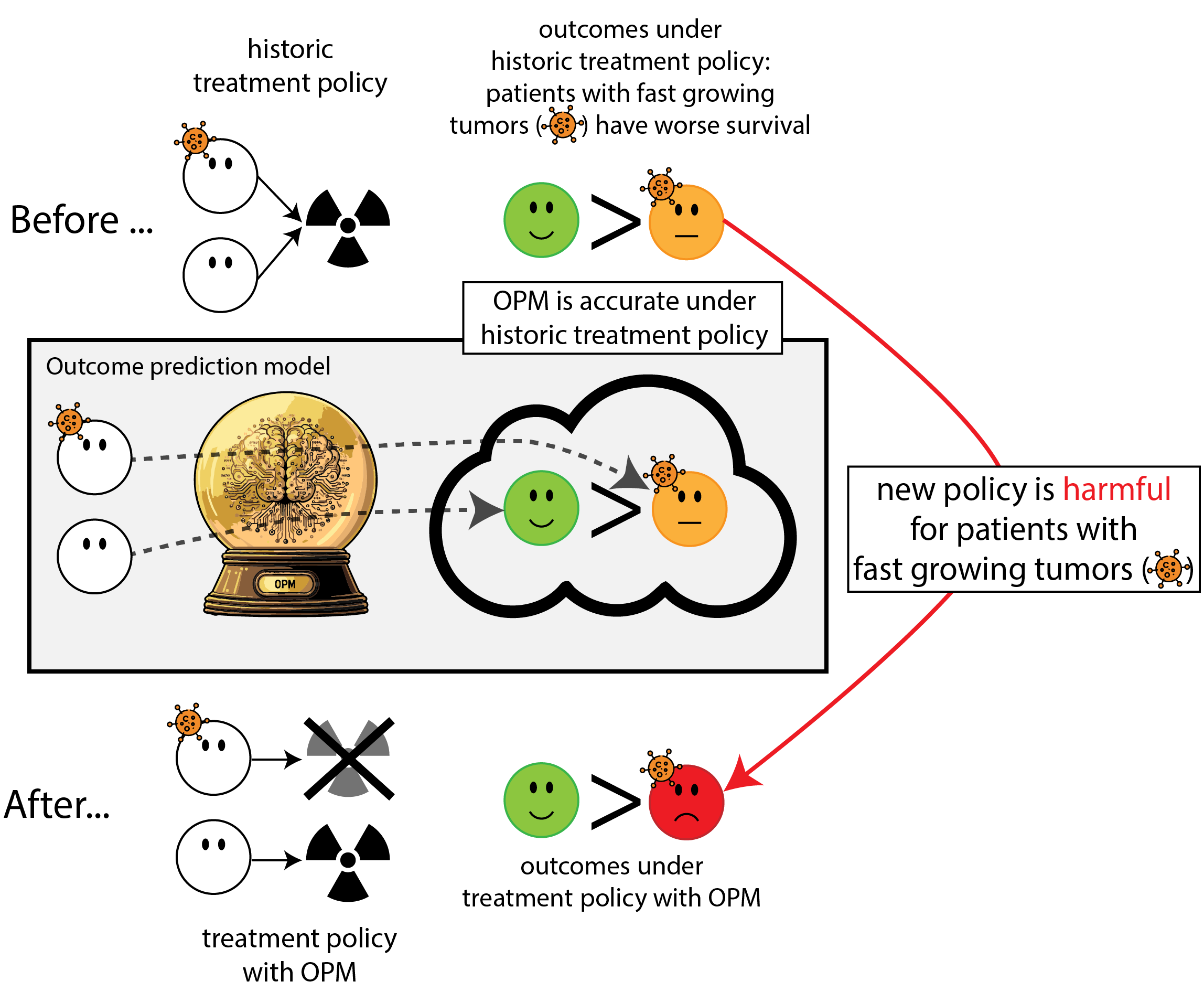
What happened here?

  • had a ‘good’ model, got a bad policy

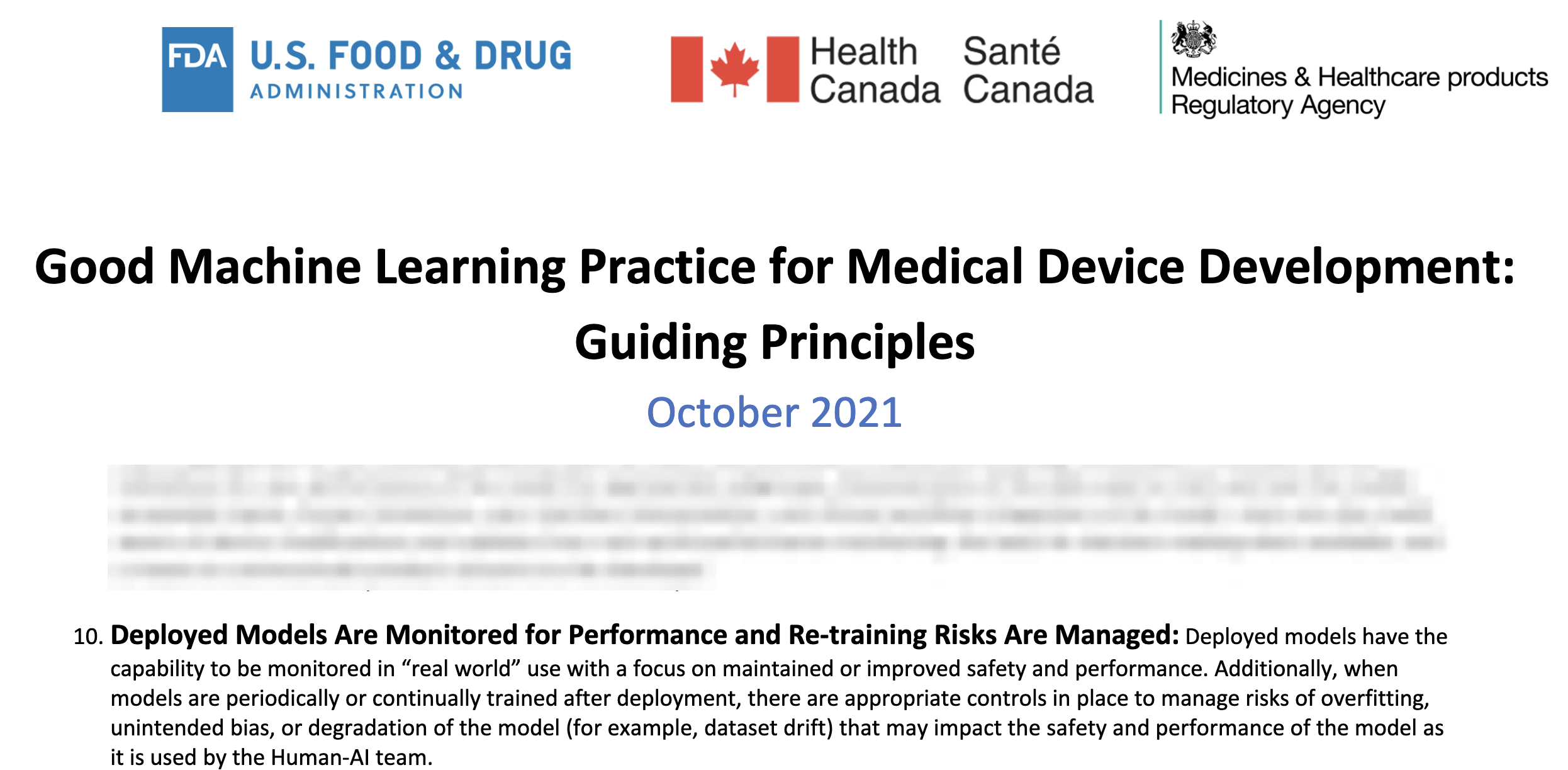
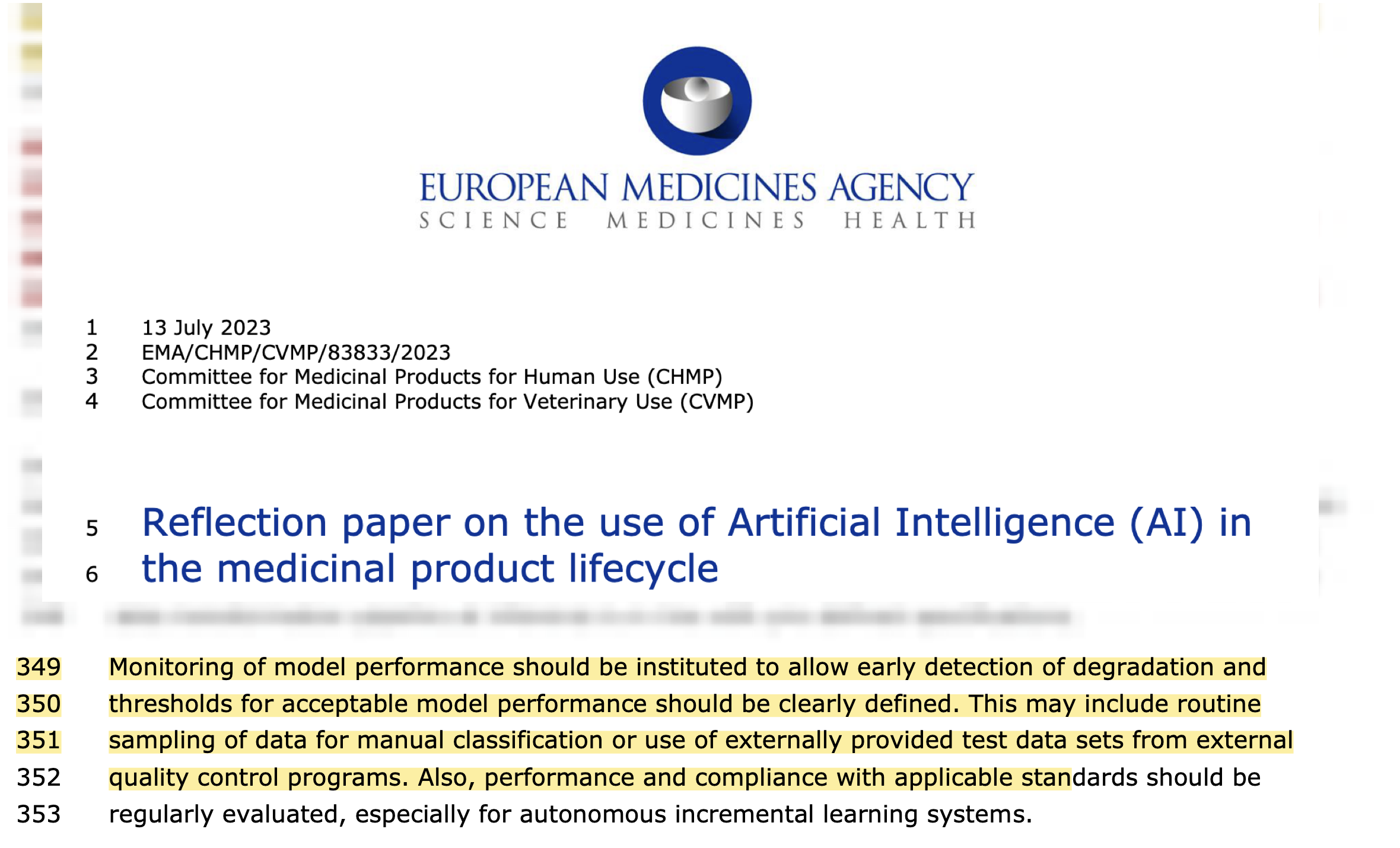
Regulation to the rescue: we need to monitor (AI) models
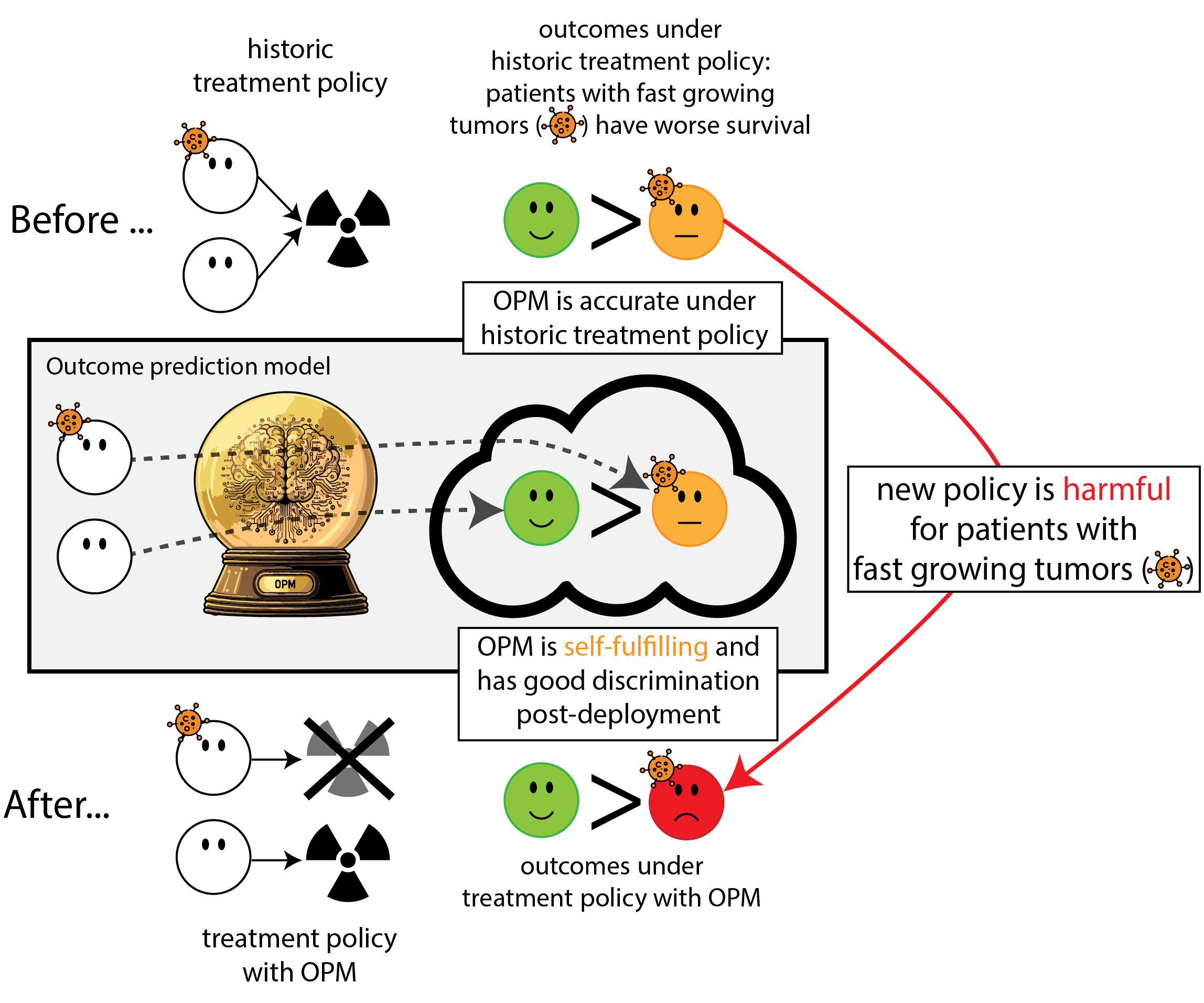
What happened in monitoring?

  • the model re-inforced its own predictions (self-fulfilling prophecy)
  • took a measure of predictive performance (AUC)
  • mistook it for a measure of (good) impact

Our paper

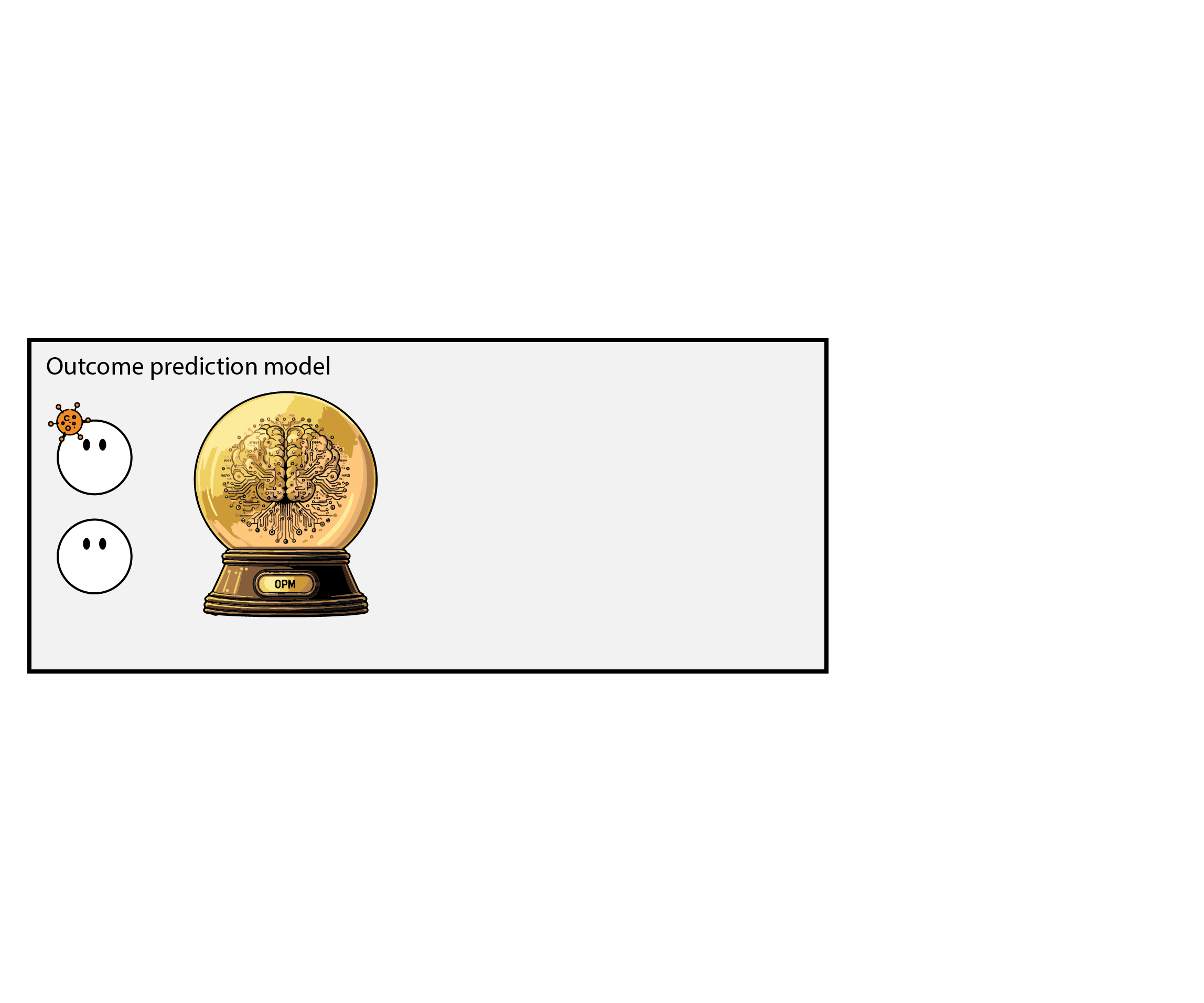
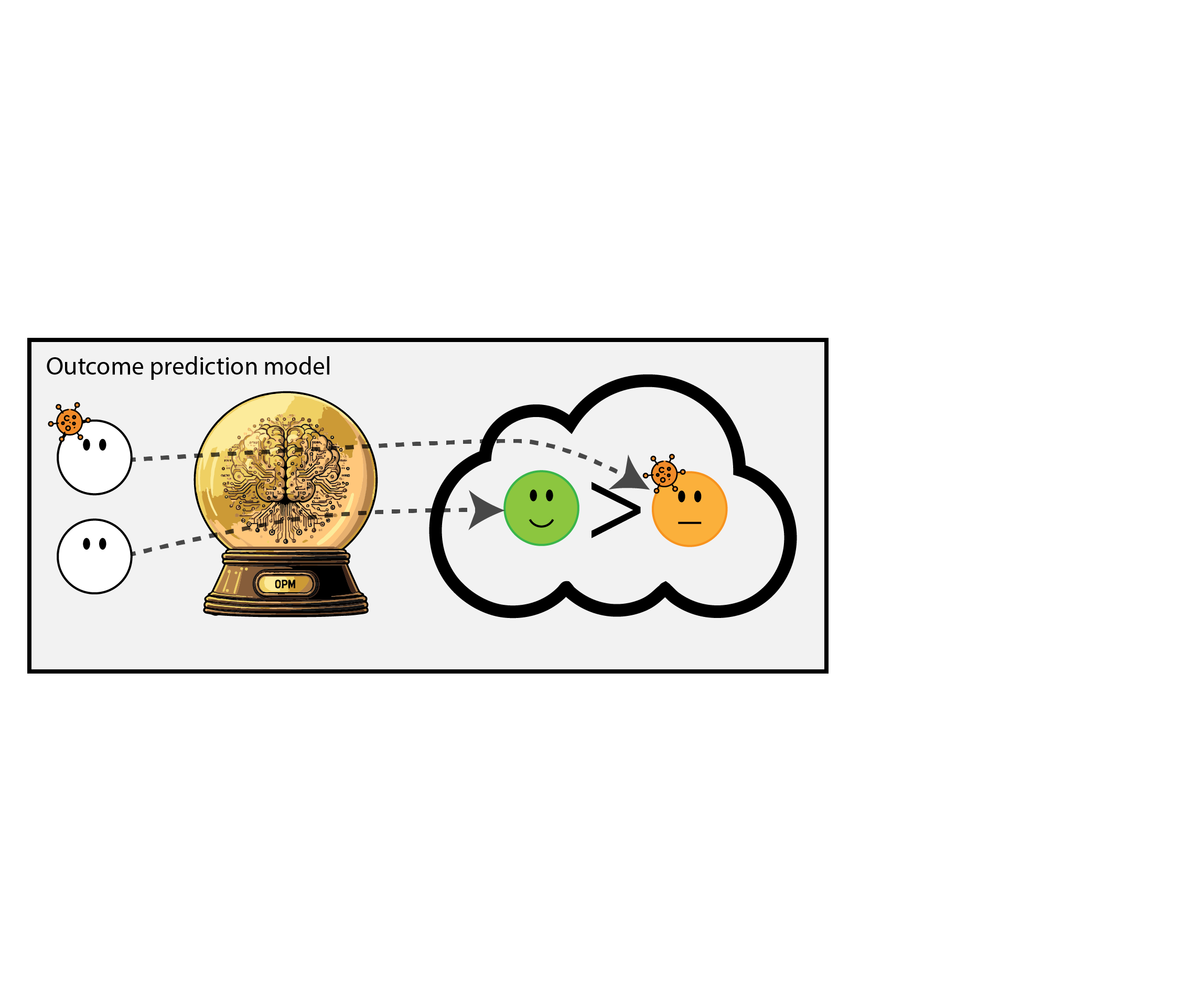
We formalize the simplest general case of introducing an ‘outcome prediction model’ for decision support

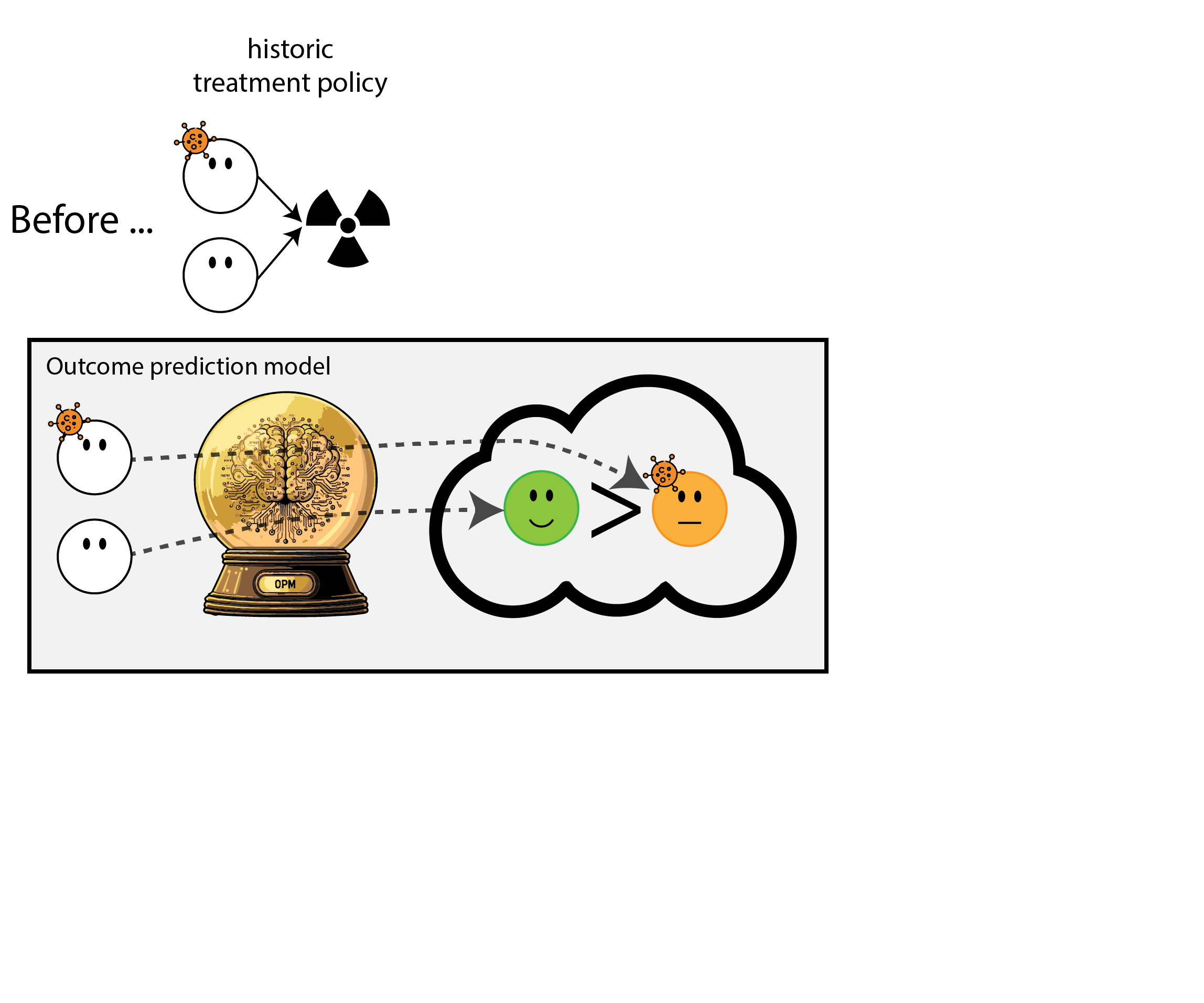
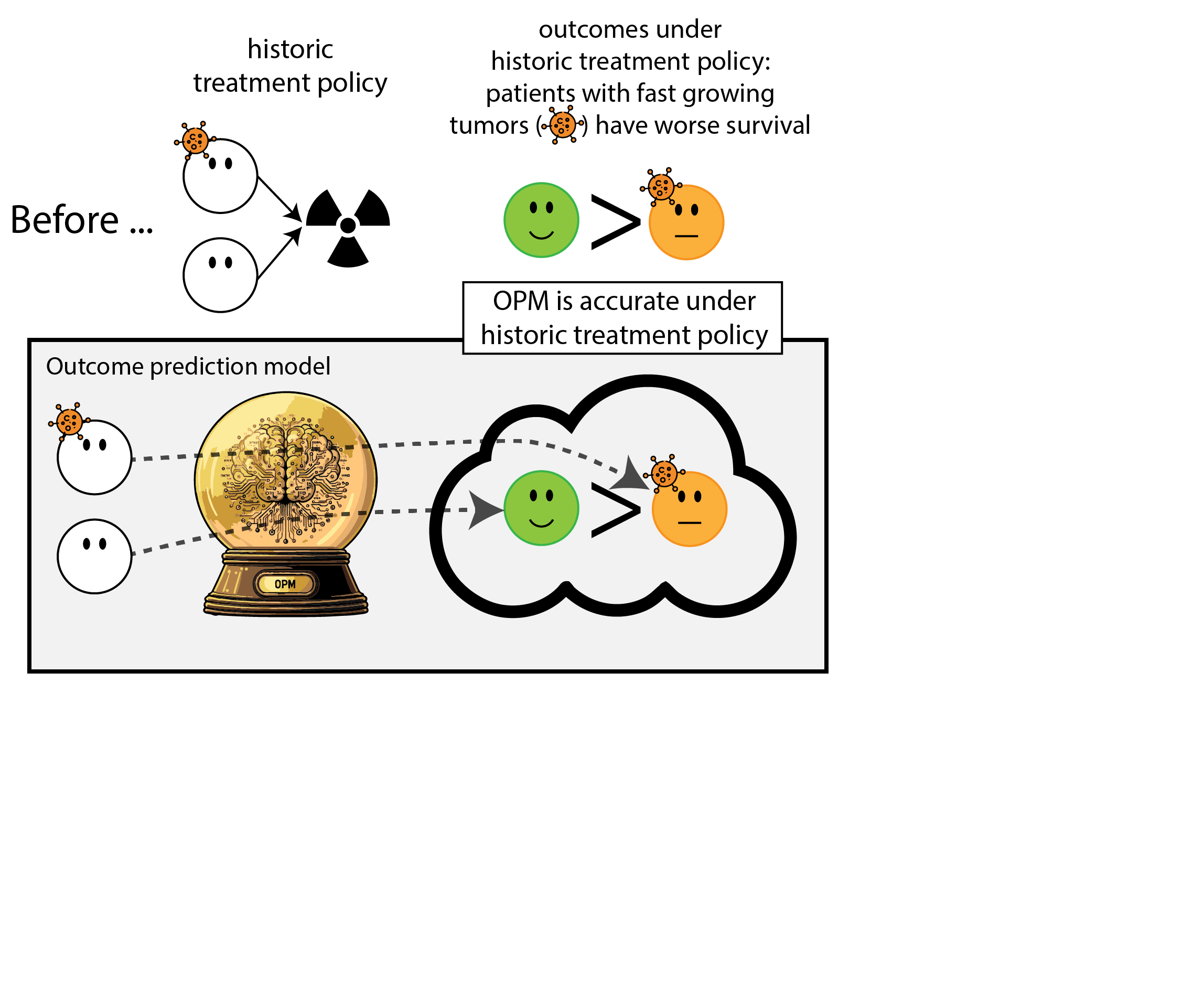
  • before: everyone treated (\(T=1\))(or untreated (\(T=0\)))
  • new binary feature \(X\)
  • outcome prediction model: \(\mu(x) = P(Y=1|X=x)\)
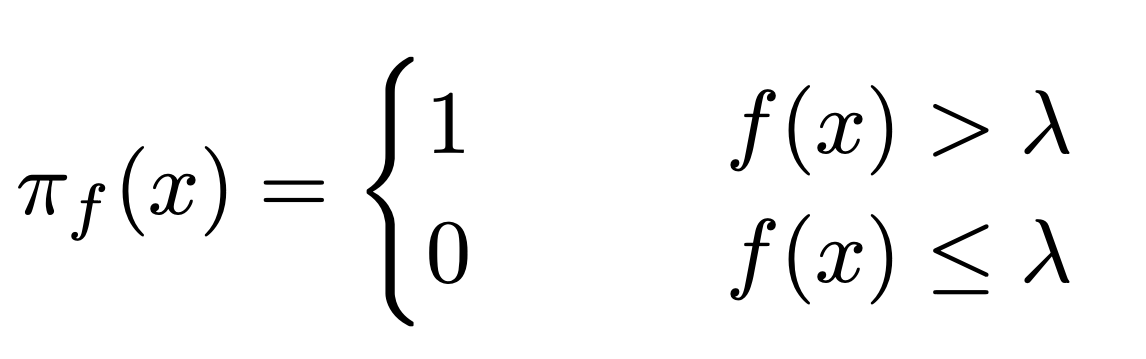
  • new policy based on OPM: treat when \(\mu(x) > \lambda\) (assume non-constant policy)
Our paper

Define:

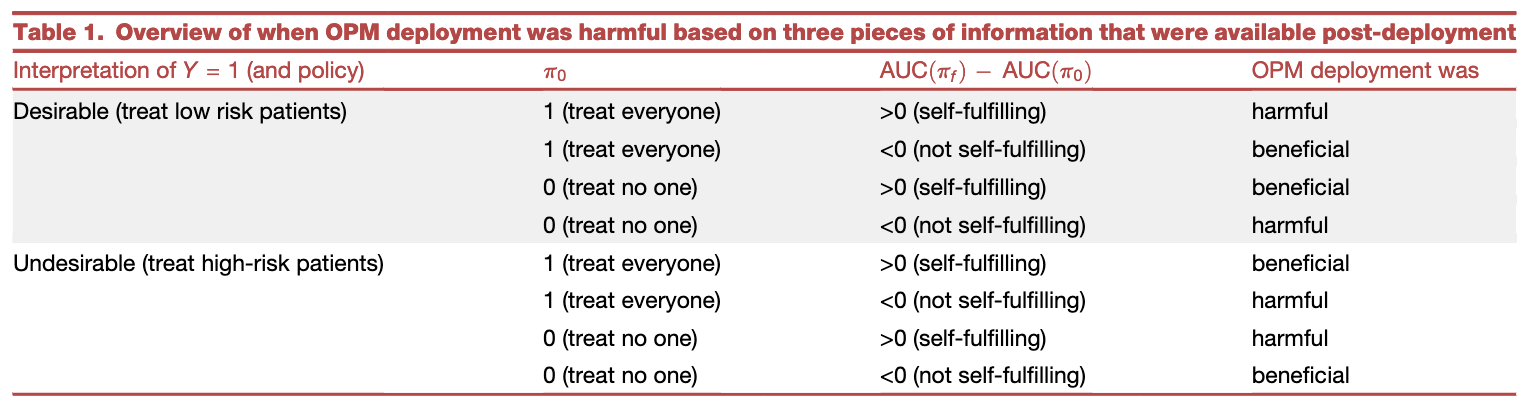
  • harmful: new policy leads to worse outcomes (for \(X=x\), or marginally)
  • self-fulfilling: after deployment, re-evaluating the model yields same or better AUC

When can harmful self-fulfilling prophecies occur?

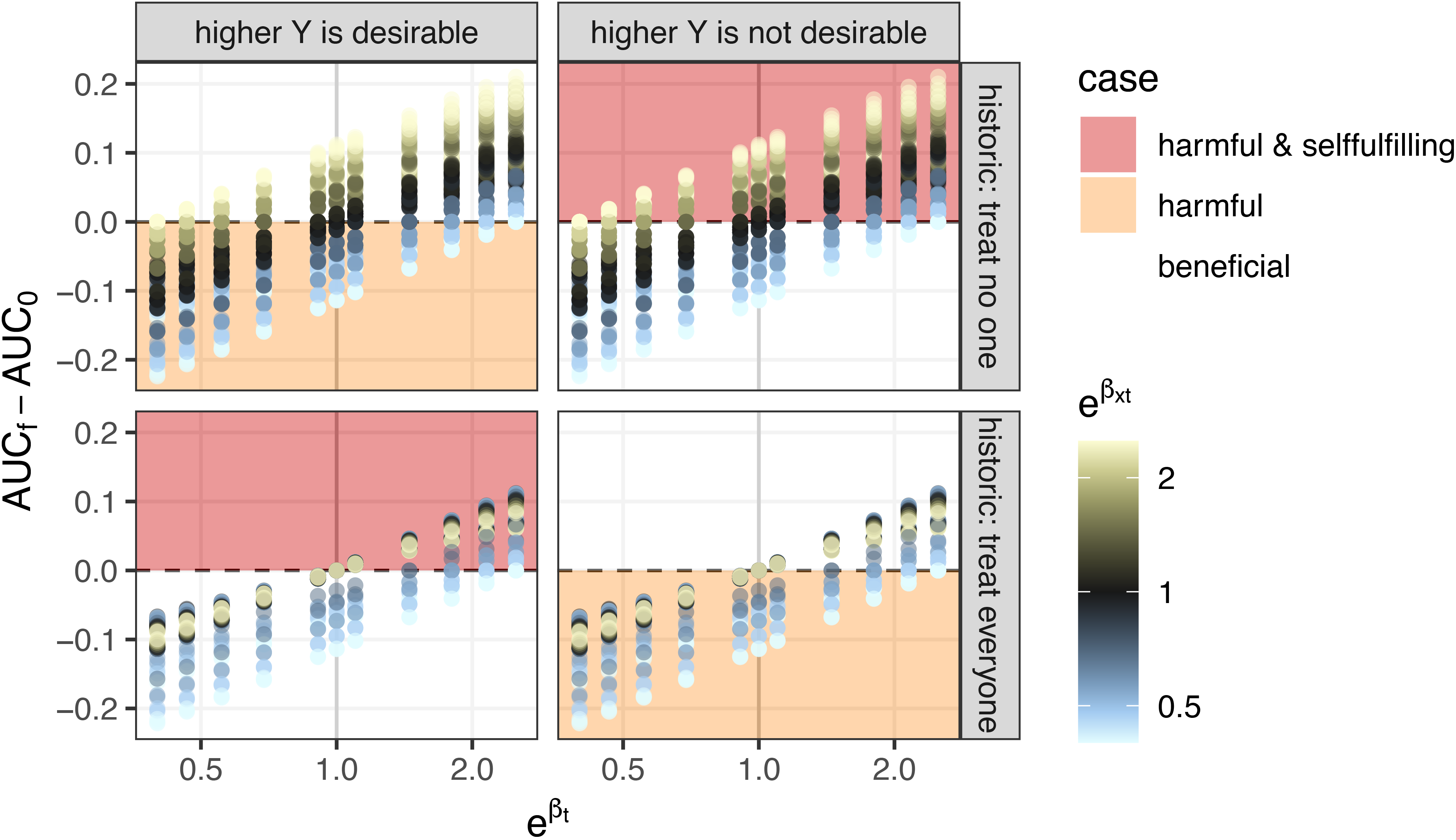
  • for a grid of values of:
    • baseline outcome rates
    • treatment effect for \(X=0\)
    • treatment effect for \(X=1\) (treatment interaction)
    • prevalence of \(X\)
    • historic policy (always treat or never treat) and interpretation of \(Y\) (1 = good, 1 = bad)
  • calculate and compare with pre-deployment:
    • expected values of outcomes (harmful?) \[E_{\pi_f}[Y \mid X=x] = \pi_f(x)\, E[Y_1 \mid X=x] + (1-\pi_f(x))\, E[Y_0 \mid X=x]\]
    • AUC (self-fulfilling?) calculated based on sensitivity and specificity
  • question: Can harmful self-fulfilling prophecies occur in realistic scenarios?

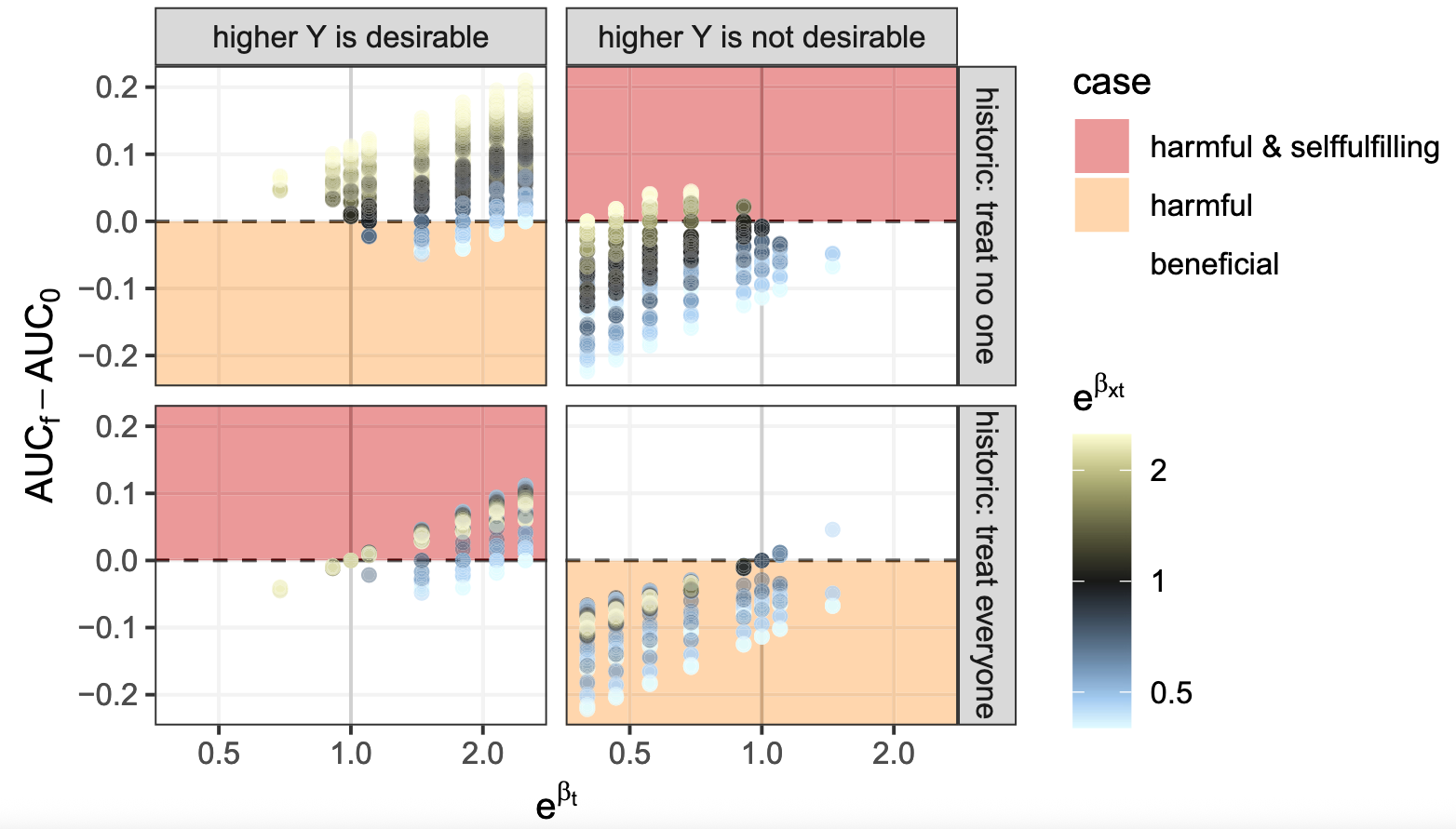
Harmful self-fulfilling prophecies occur in cases without extreme treatment (interaction) effects
Also when removing settings where the average treatment effect is harmful
Deterministic evaluation of usefulness of policy
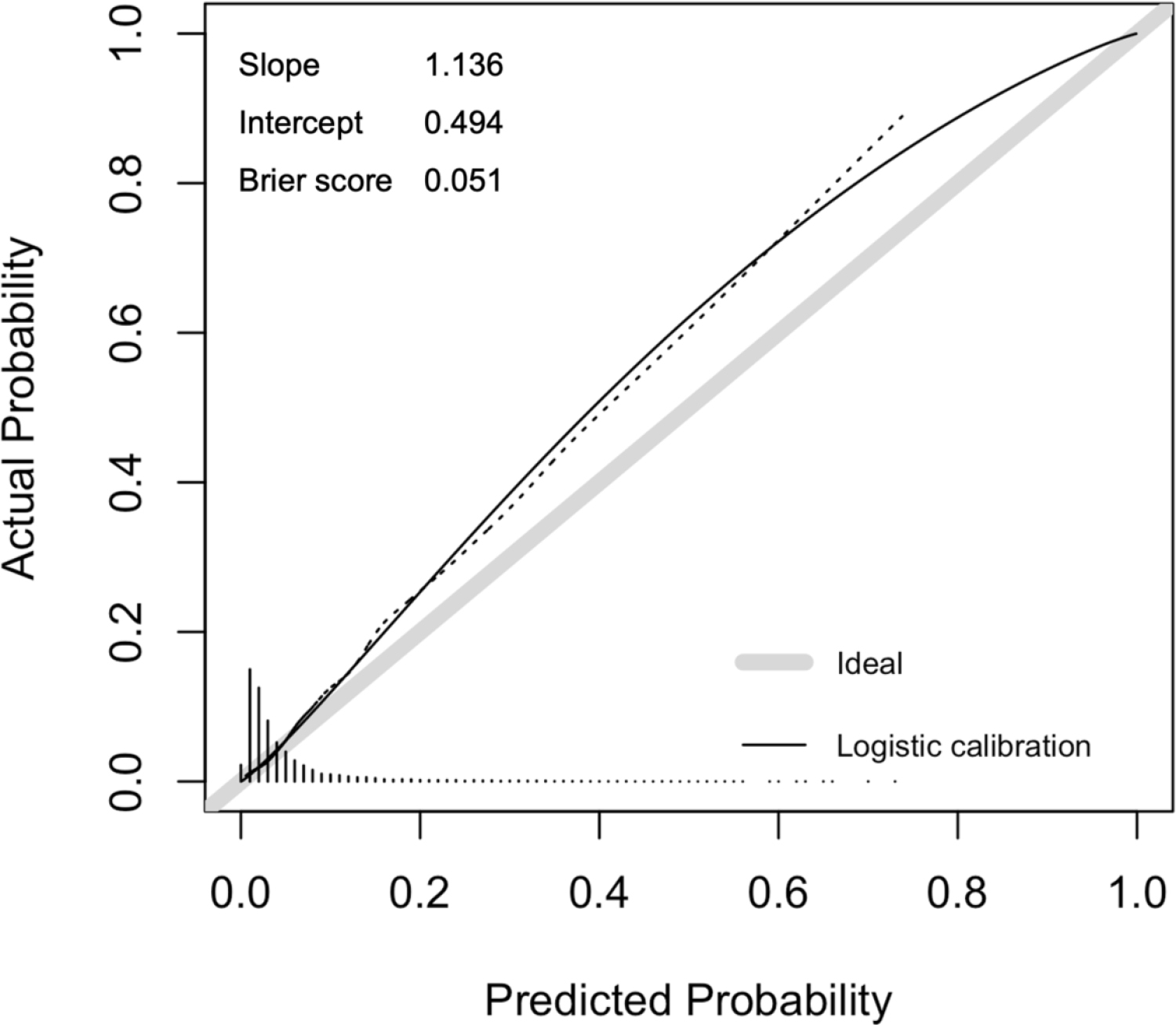
Calibration result

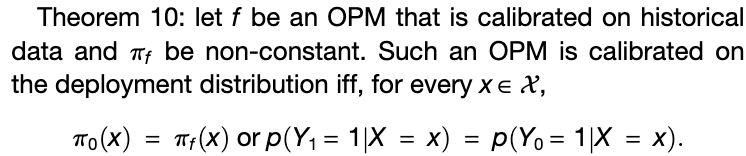
  • ergo deployment of model was useless

What would have been the correct thing to do?

  • data provides only outcomes under one treatment policy (e.g. everyone treated)
  • cannot learn about counterfactual outcomes (e.g. what would have happened if we hadn’t treated)
  • post-deployment evaluation should have incorporated monitoring of outcomes per covariate pattern and treatment group
  • can be compared against pre-deployment data to detect harmful self-fulfilling prophecies (under assumption of no concurrent changes)

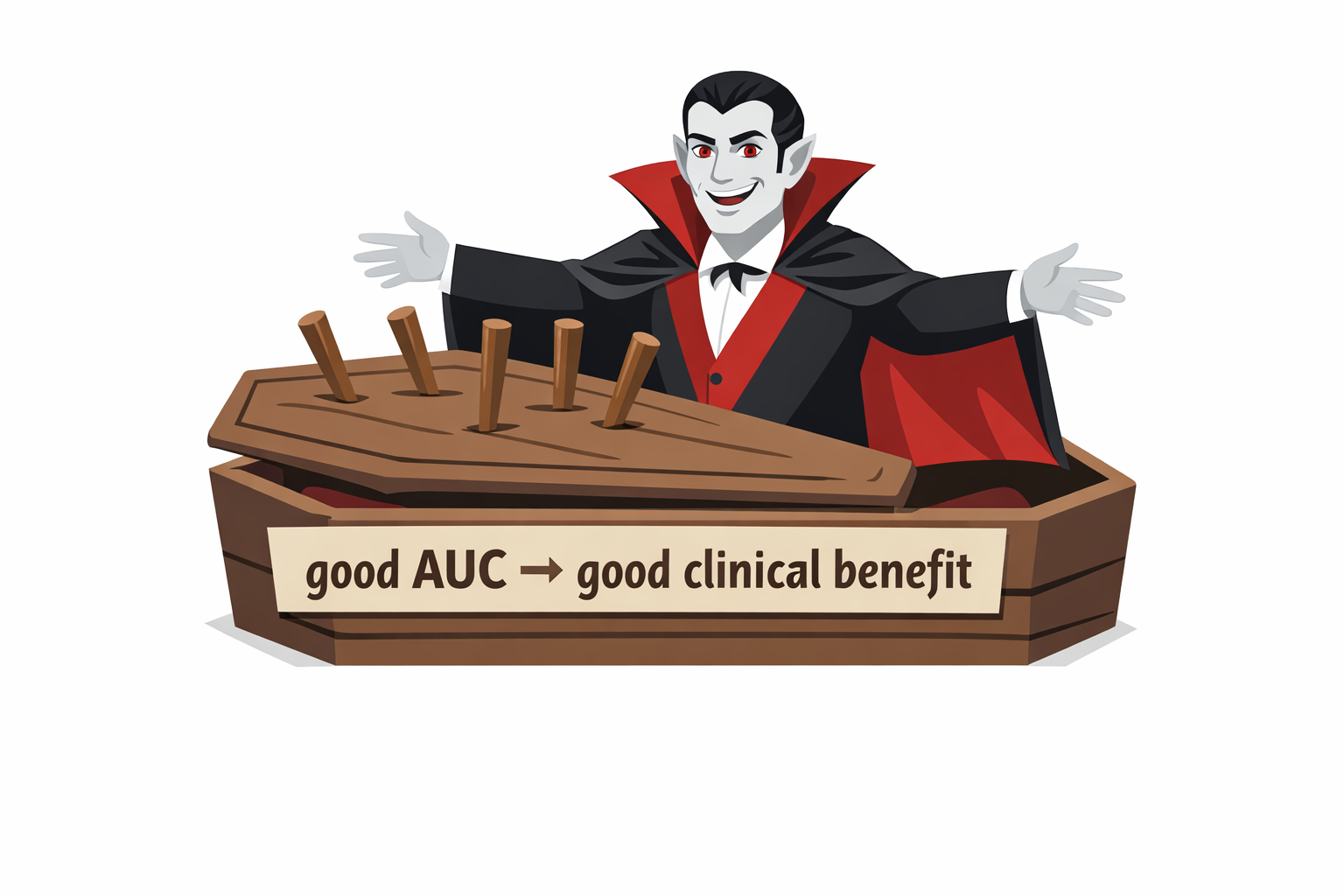
Did we slay the vampire?

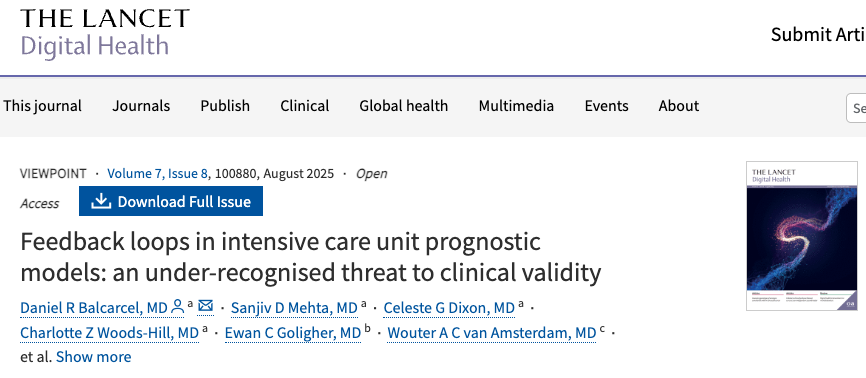
Reception

Editorial

Press coverage - urgent mail
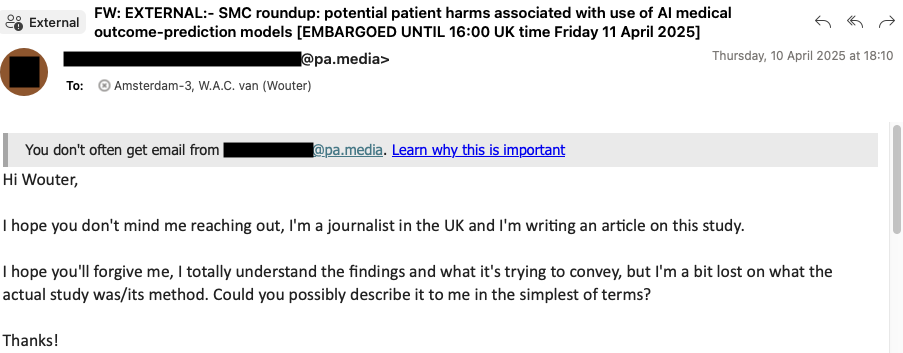
Press coverage
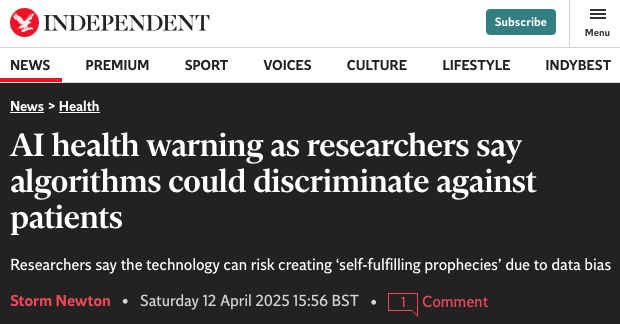
Press coverage
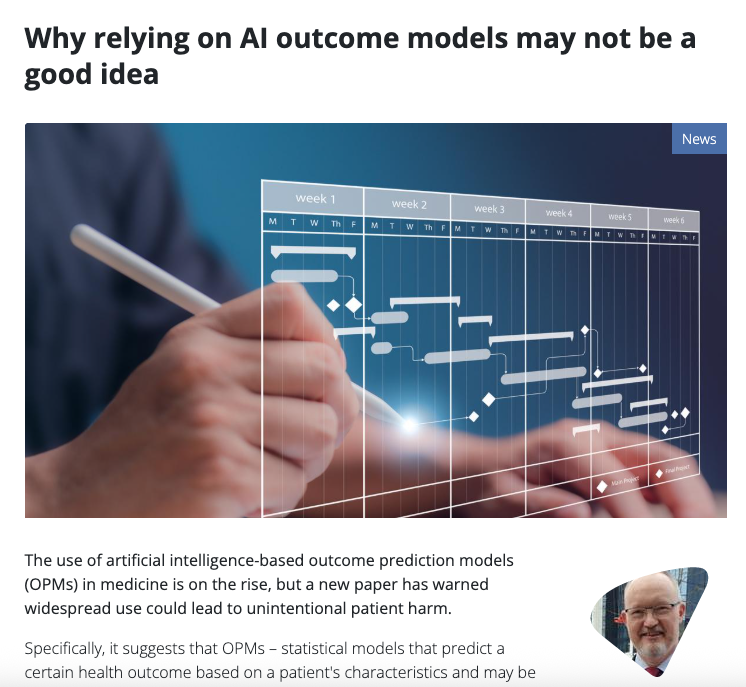
Science Media Center Roundup (7 experts)
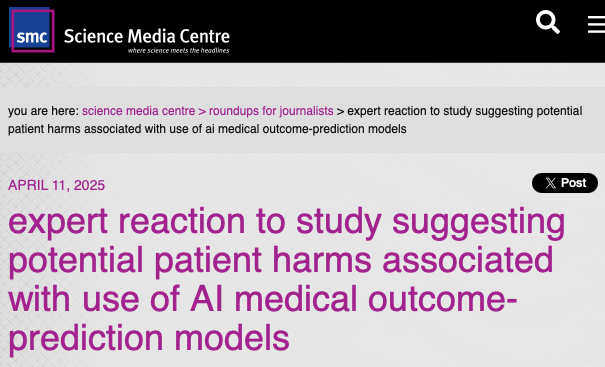
Science Media Center Roundup (7 experts)

  • Withholding lifesaving treatments: When AI predicts low survival for certain patients, clinicians may deny treatment, causing worse outcomes that falsely validate the model.

  • Rehabilitation triage bias: AI tools predicting poor recovery after surgery can lead hospitals to allocate fewer rehab resources to those patients, directly causing the poor outcomes the model anticipated.

  • Post-deployment performance paradox: If real-world care improves outcomes for certain patients, models trained on historical data may appear to “fail,” encouraging withdrawal of beneficial changes and reinforcing the old, harmful patterns.

  • Perpetuating historical under-treatment: Models trained on biased historical data may predict poor outcomes for groups who were previously under-treated, and clinicians acting on these predictions can continue the cycle, worsening outcomes and deepening disparities.

  • Generalisation beyond healthcare: Predictive models used in policing can label historically over-policed demographics as “high risk,” triggering intensified surveillance that produces the very outcomes used to justify the predictions.

How about guidlines and regulation?

Reflection

  • got good attention from both scientific community and press
  • us: one (of many) warnings, not guide for best practices
  • need good guidance on model development, evaluation and monitoring with a view of impact

References

Collins, Gary S., Karel G. M. Moons, Paula Dhiman, et al. 2024. TRIPOD+AI Statement: Updated Guidance for Reporting Clinical Prediction Models That Use Regression or Machine Learning Methods.” BMJ 385 (April): e078378. https://doi.org/10.1136/bmj-2023-078378.
Kattan, Michael W., Kenneth R. Hess, Mahul B. Amin, et al. 2016. “American Joint Committee on Cancer Acceptance Criteria for Inclusion of Risk Models for Individualized Prognosis in the Practice of Precision Medicine.” CA: A Cancer Journal for Clinicians 66 (5): 370–74. https://doi.org/10.3322/caac.21339.
Moons, Karel G. M., Johanna A. A. Damen, Tabea Kaul, et al. 2025. PROBAST+AI: An Updated Quality, Risk of Bias, and Applicability Assessment Tool for Prediction Models Using Regression or Artificial Intelligence Methods.” BMJ 388 (March): e082505. https://doi.org/10.1136/bmj-2024-082505.
Prognostic Models for Decision Support Need to Report Their Targeted Treatments and the Expected Changes in Treatment Decisions. 2024. December 6. https://www.bmj.com/content/385/bmj-2023-078378/rr-1.
Van Amsterdam, Wouter A. C., Nan Van Geloven, Jesse H. Krijthe, Rajesh Ranganath, and Giovanni Cinà. 2025. “When Accurate Prediction Models Yield Harmful Self-Fulfilling Prophecies.” Patterns 6 (4): 101229. https://doi.org/10.1016/j.patter.2025.101229.